

“The city taught me the beauty of color,” said fashion designer Yves Saint Laurent during one of his many visits to Marrakesh. In fact, the buildings and magnificent architecture of the Royal City in the center of Morocco do have a slightly reddish color. Together with its many markets and green oases, the city radiates with an especially colorful splendor, which is what characterizes the magic of this city, with its exotic smells, unusual sounds and many cultural attractions. Book a vacation in Marrakesh now and experience the fairy tale of the 1,001 Nights!

A feast for the senses
Vacation in Marrakesh
Why vist Marrakesh
✓ Historic old town
Medina is not only the oldest part of the city, but also its cultural center. This city is characterized by its traditional buildings, magnificent mosques and bustling markets.
✓ A world of sound, fragrance and color
“Souks” are the traditional markets located throughout the city and allow visitors to immerse themselves in the magical world of the 1,001 Nights on their city break in Marrakesh.
✓ Taste explosions
The food is not only relatively cheap, but also extremely delicious. Tagines, couscous or kebabs will transport you to gastronomic heaven!

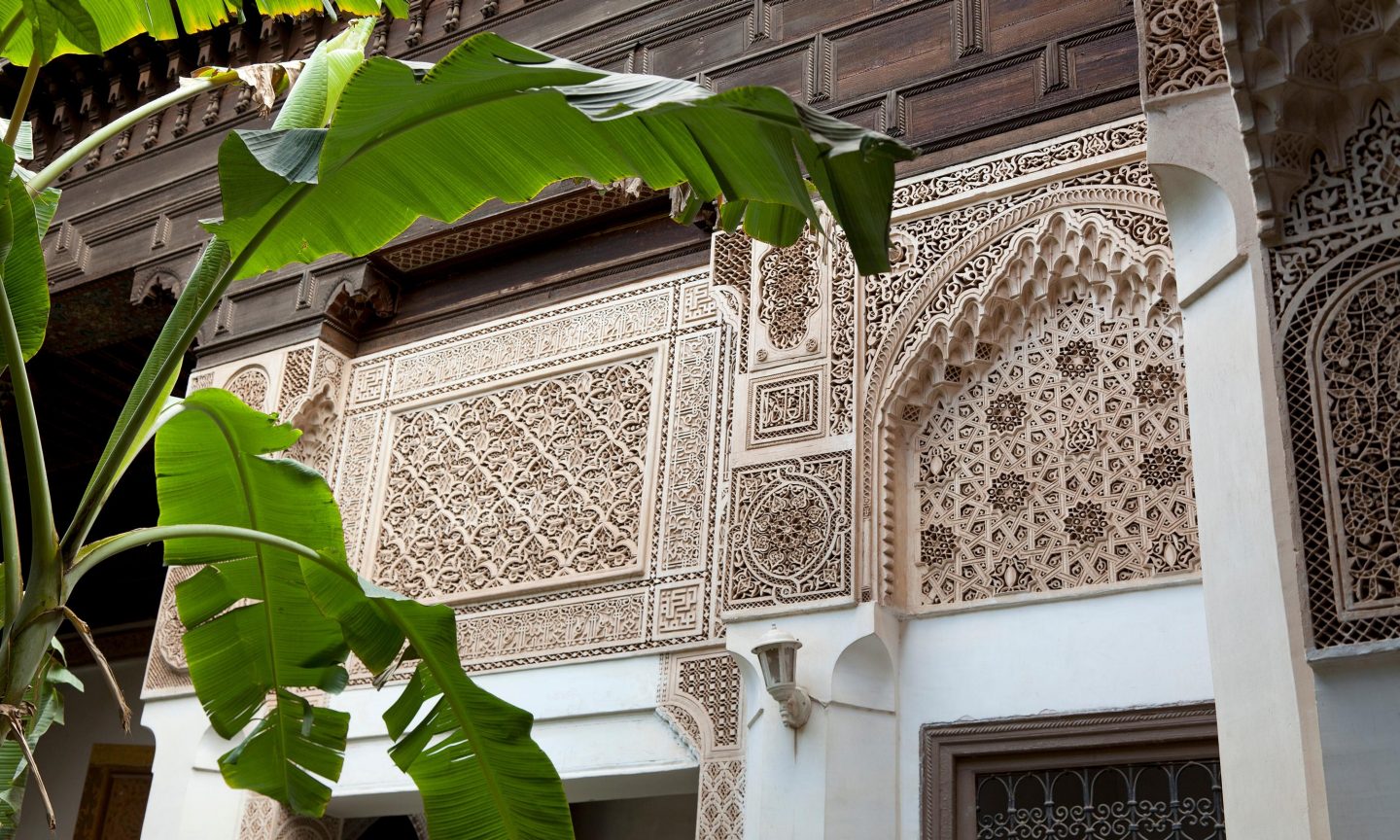
A wonder of Islamic architecture: the Bahia Palace
With its numerous ornaments and carvings, this palace in the south of the Medina is one of the most beautiful buildings in Morocco. You can easily get lost in its over 150 rooms and riads built in the Moorish-Andalusian style: never mind. There’s way too much to see here anyway.
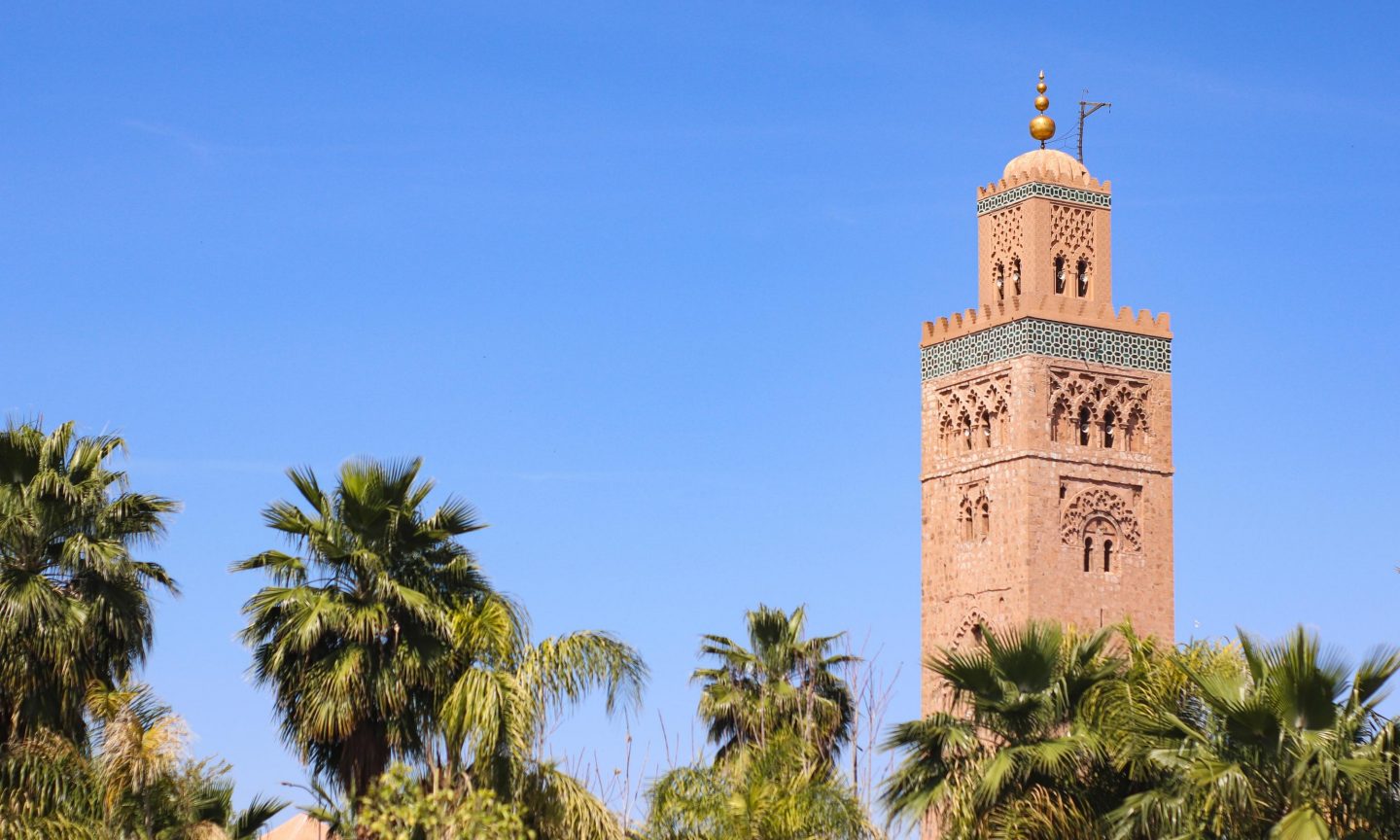
A magnificent landmark of the city: Koutoubia Mosque
The striking silhouette of the minaret of the Kutubiyya Mosque reaches high into the sky. This magnificently decorated building is the symbol of the city and is located in the center of a palm tree garden. Even if non-Muslims and women are not permitted to enter, you should definitely pay a visit to this cultural highlight!
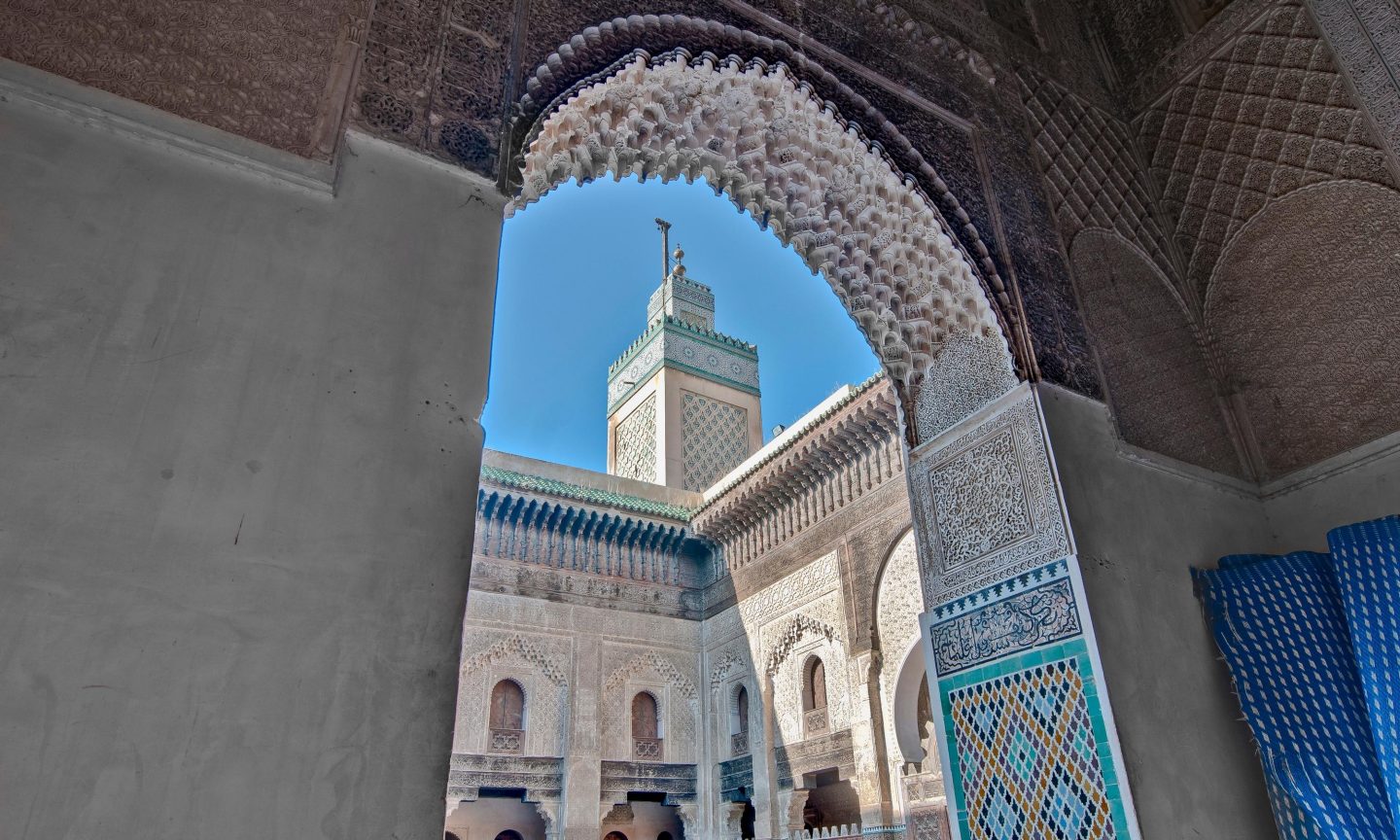
A highlight of Islamic architecture: Madrasa
The former Koranic School of Ben Youssef Madrasa should also feature on your cultural bucket list. The distinctive architecture of this strikingly decorated building delights not only art historians, but is an absolute highlight for anyone interested in culture.
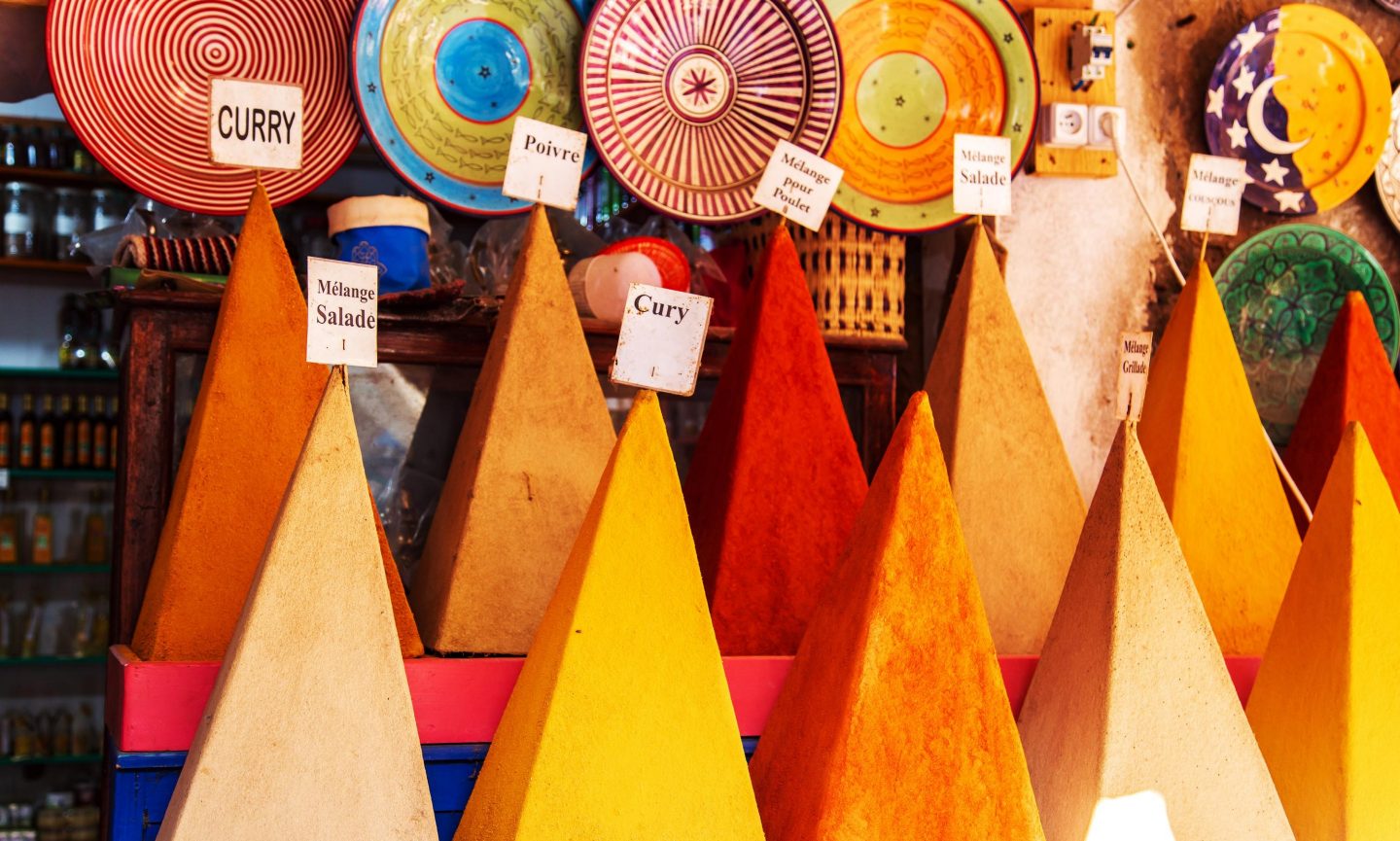
Amid the everyday bustle of the souks
The souks of the Medina are the trading districts of the old town of Marrakesh and a place full of life. There is an aroma of spices, shopkeepers offer their wares, while crowds, mopeds, donkeys and carts crowd along the narrow lanes. You haven’t been to Marrakesh at all if you haven’t visited the souks of the Medina!
World-famous market square in the center of Medina
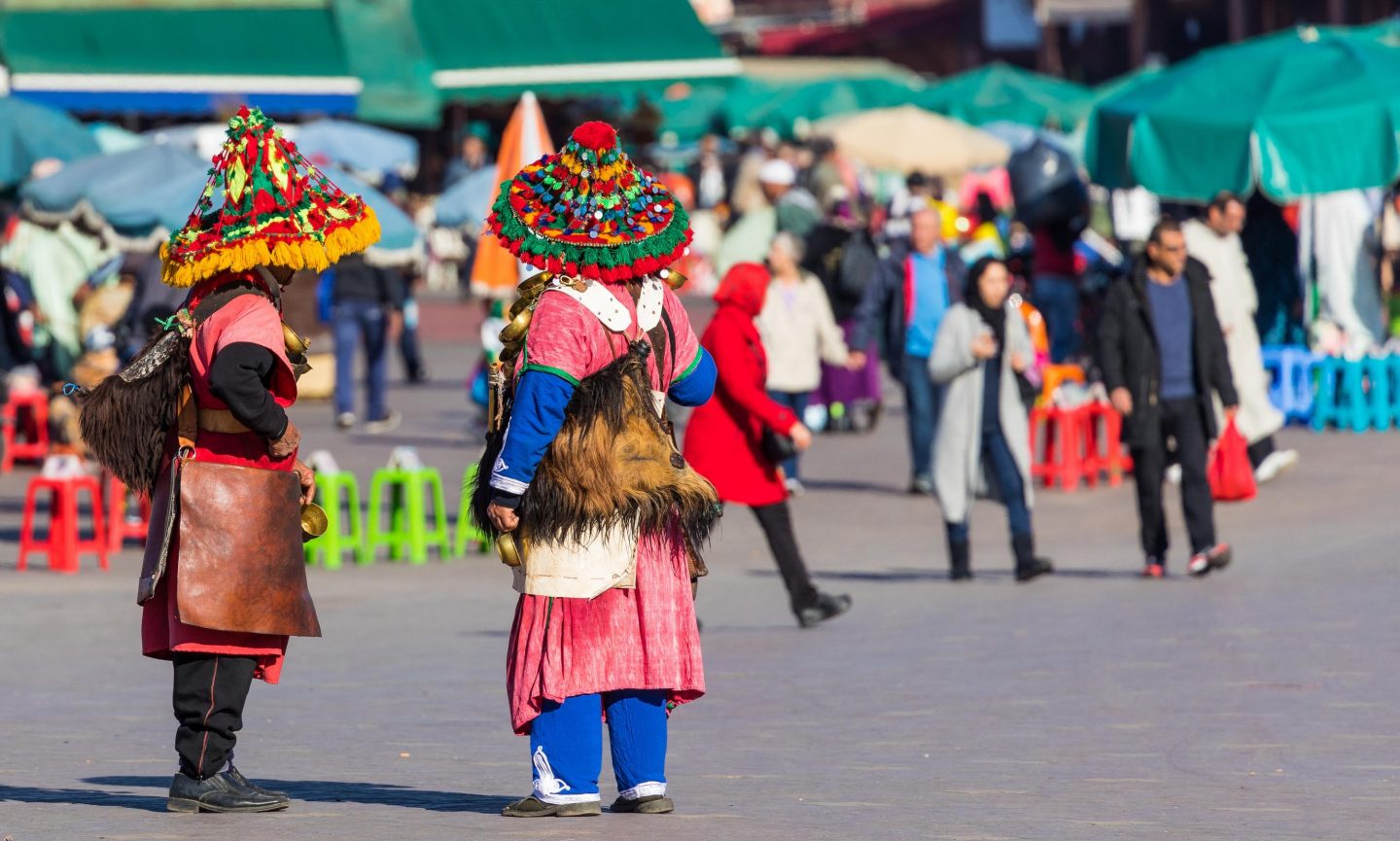
Jemaa el-Fnaa, also known as the “Square of Jugglers,” forms the center of the Medina and is probably the best-known market square anywhere in Morocco. And the center of the Medina rightly bears this name: from fairytale storytellers to fire-eaters, the most extraordinary arts are showcased here. You’ll be totally amazed. Delicious street food and live music included.
Tranquil oases of the Medina
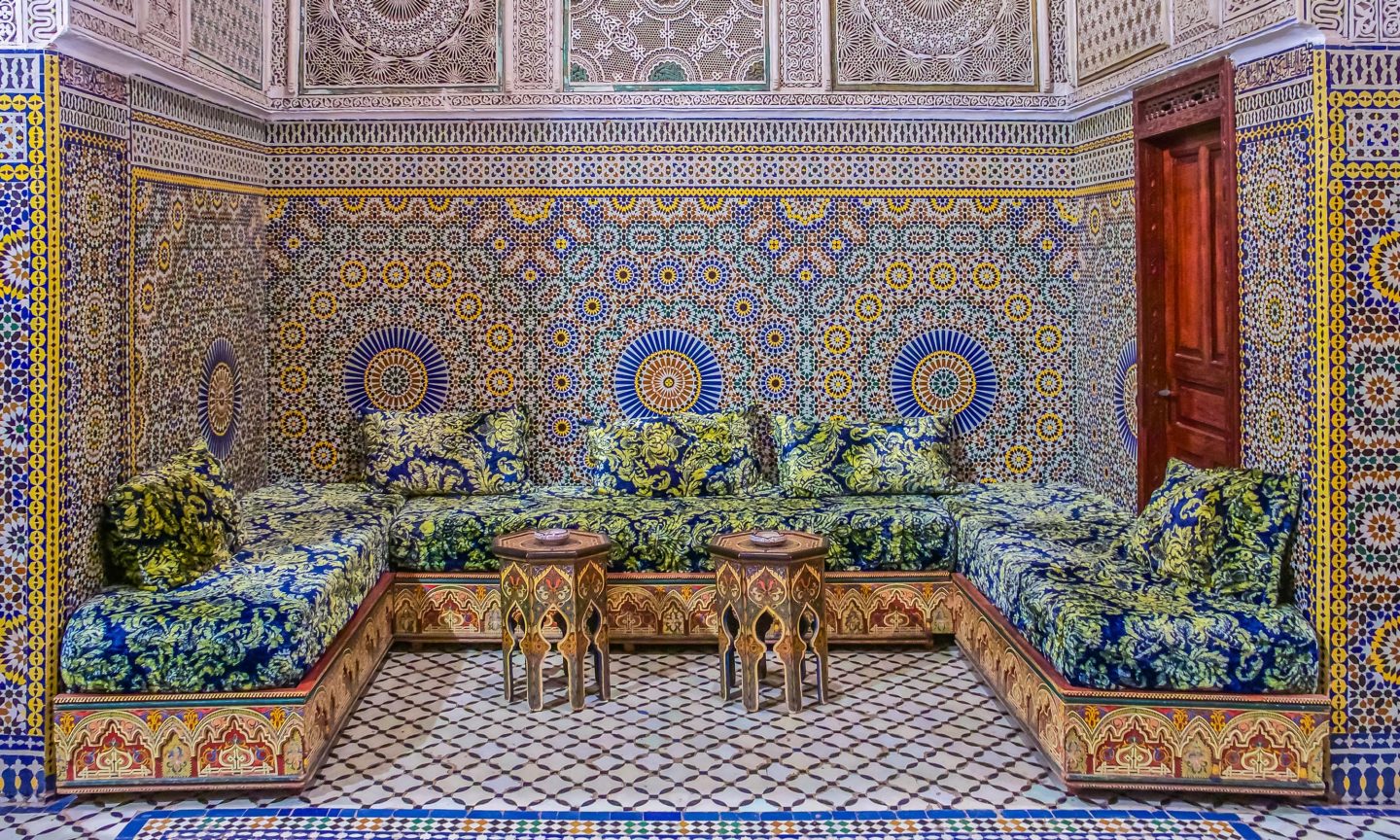
Who would have thought that there’d be tranquil oases in the center of the bustling Old Town? The so-called riads are small houses with a green inner courtyard – often even with a pool or fountains. Many of the riads, whose tradition goes back to the 15th century, are used as hotels or apartments: a must-stay for an authentic Morocco vacation!
Hiking paradise: the Atlas Mountains
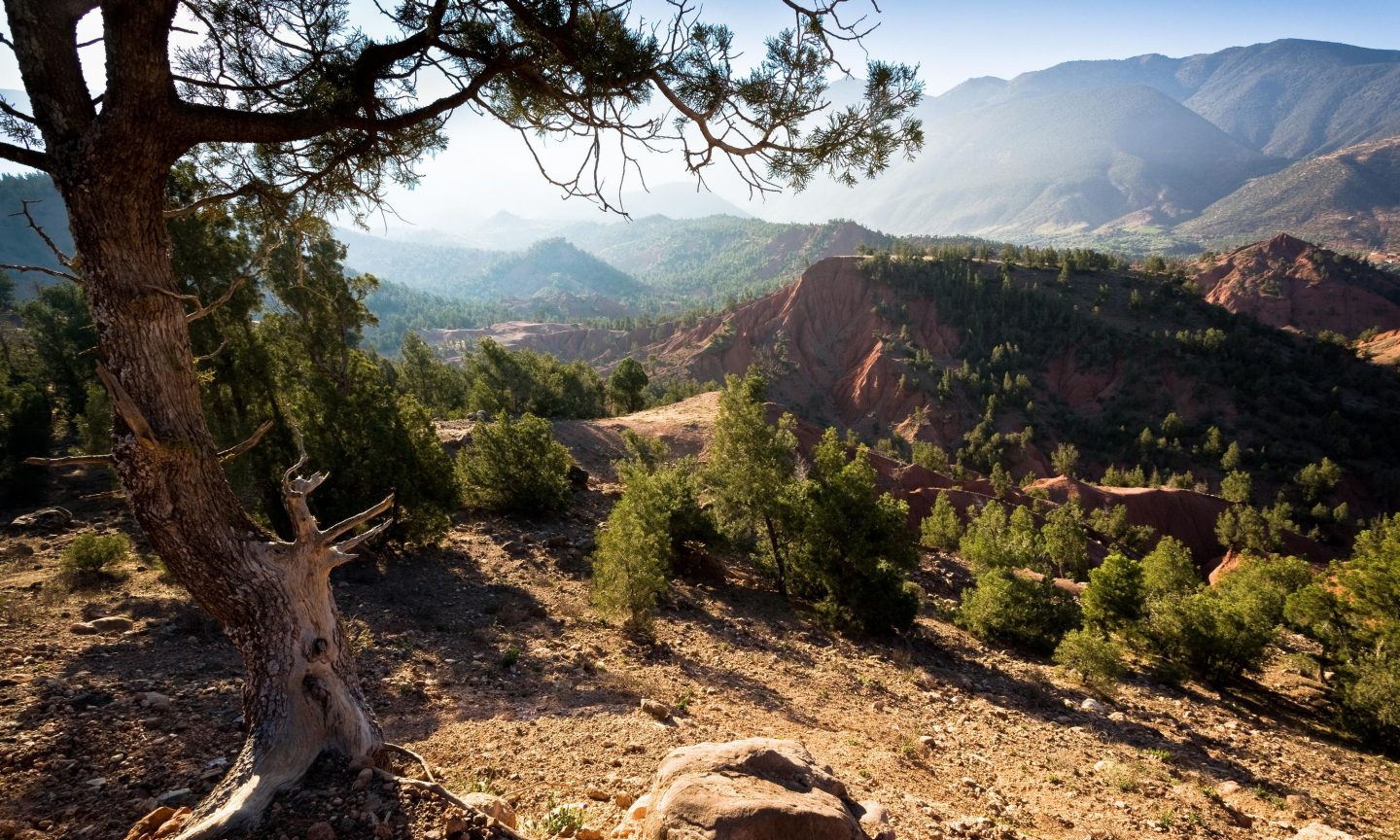
Since Marrakesh is only about 90 km from the Atlas Mountains, your vacation in Marrakesh can become a hiking holiday as well as a city break. Even if for only one or a few days: on a hike through the high mountains, your visit can take you to traditional Berber villages, and you can enjoy the magical waterfalls of Setti Fatma.
No vacation without beach vibes
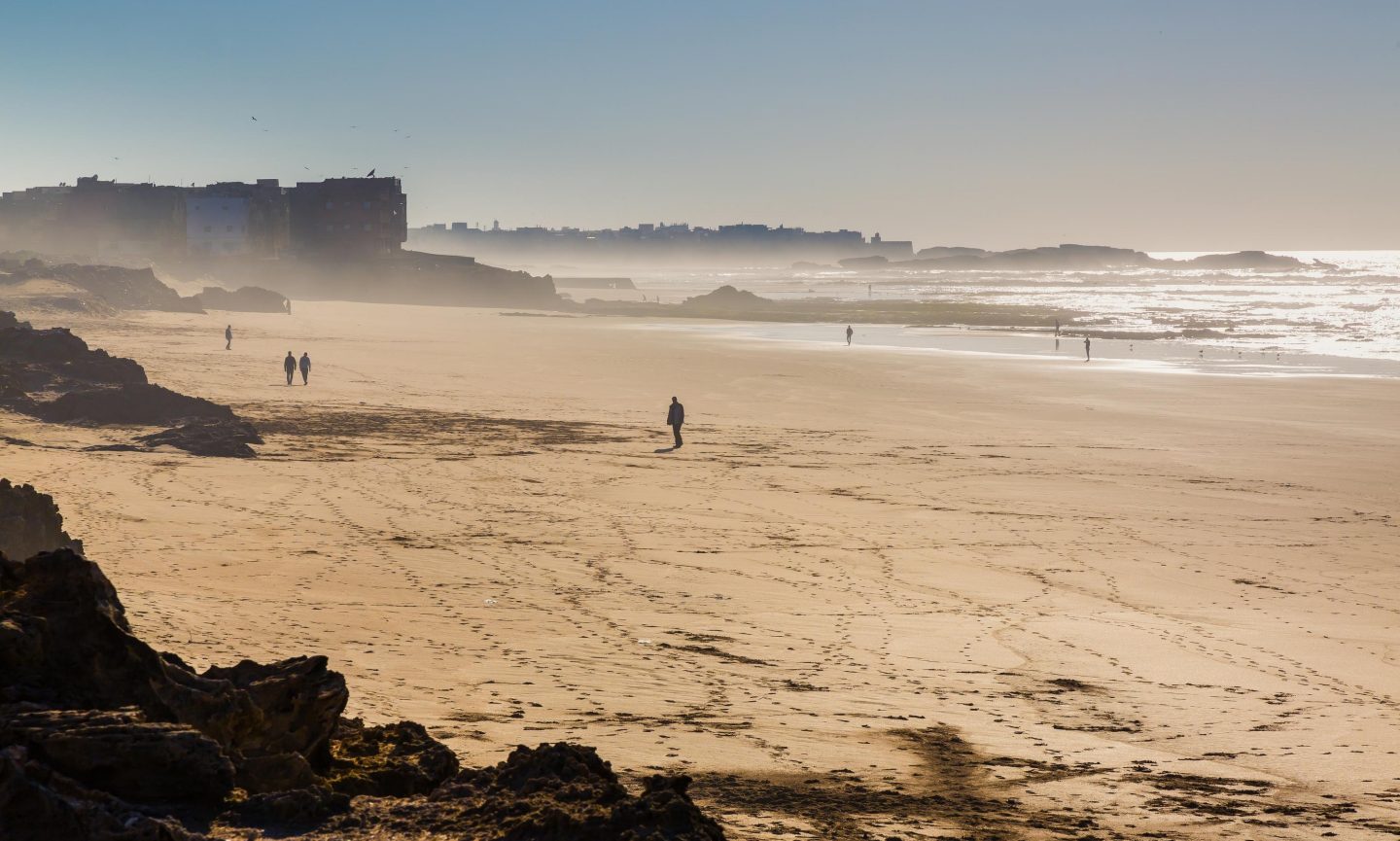
Even though a visit to Marrakesh is more of a city break than a beach holiday, you don’t have to miss out on dangling your feet in the sea at least once. The port city of Essaouira is, fortunately, situated on one of the most beautiful beaches in Morocco and is located about 180 km from Marrakesh. So, pack a towel and soak up some beach vibes for a day!
In the desert
Agafay Desert is just 30 km from Marrakesh. During a tour of this mysterious location, you can visit traditional Berber villages and stroll through the expanses of the desert – all with a view of the snowy peaks of the Atlas Mountains. A great insider tip for a vacation as a couple: a romantic dinner in the desert under the stars!
Bucket list for your vacation in Marrakesh
1. The Dar el Bacha coffee house
This famous café used to be a royal palace, just like out of the “Thousand-and-One Nights.” More than 200 varieties of Arabica coffee are served here in brass cans, along with delicious food.
2. Hammams
Hammams are beautiful traditional Turkish-style baths and a must in Marrakesh. You’ll find these relaxing spots all over the city and also in many hotels and riads. Why not give yourself a treat!
3. Peppermint tea
A trip to Marrakesh would not be complete without trying the traditional mint tea. This mixture of black tea leaves, sugar and mint is more than just a drink – it’s a symbol of hospitality.
4. Majorelle Garden
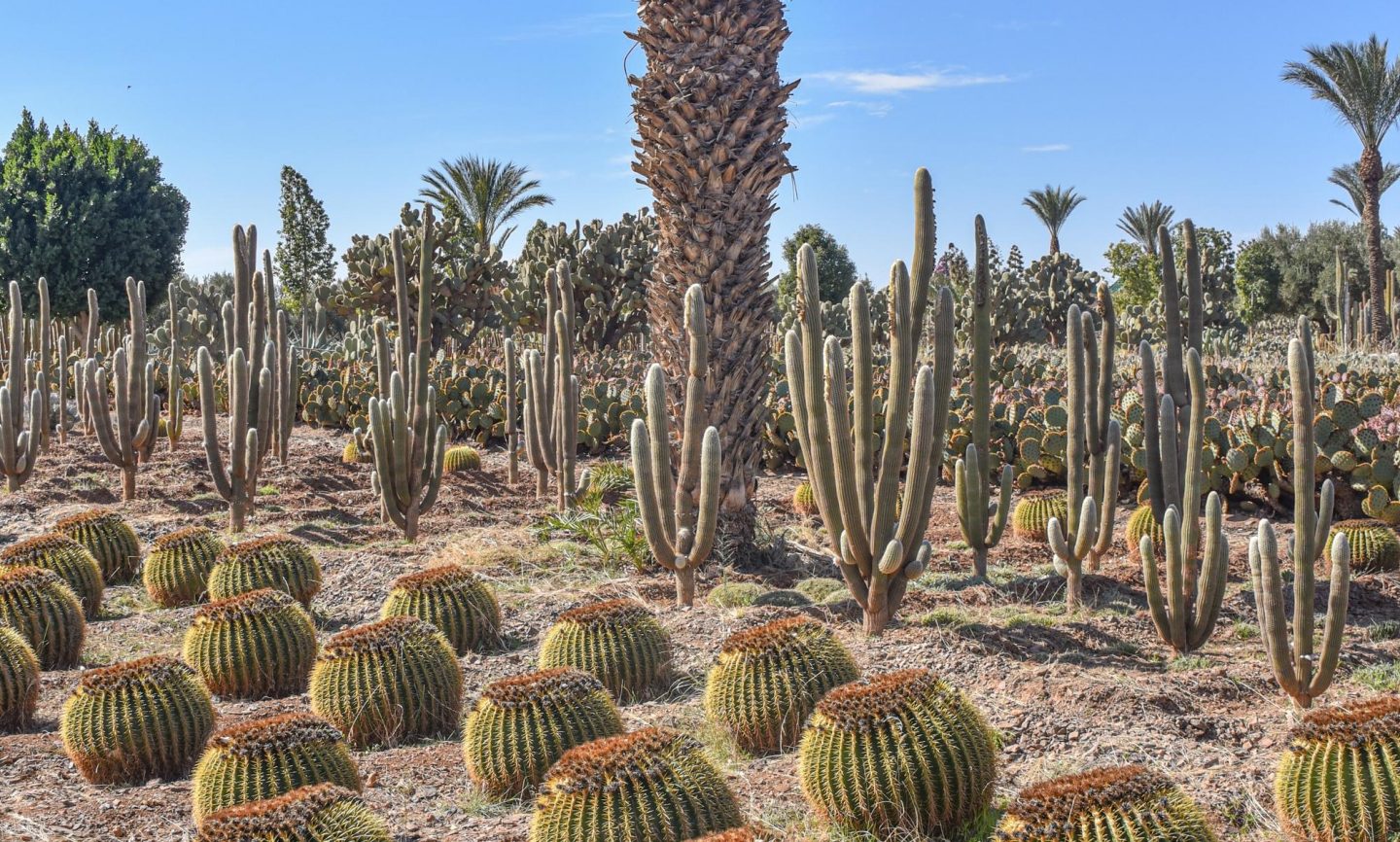
Marrakesh can be full of surprises. There’s a cool oasis amid this hectic and often suffocating city center: Jardin Majorelle. This park with its palm trees, cacti and fountains is not only a refreshing change from the city, but also a great place to take photos.
5. Marrakesh from above
Time for a few memories! How about a ride in a hot air balloon over the red city and the surrounding Atlas Mountains? This experience could be the highlight of your Marrakesh trip.
Weather & best time to travel
Marrakesh is warm and sunny throughout the year, though the temperatures can fall below 0°C in winter. The temperature can sometimes rise to over 40°C in high summer, i.e., from June to September – not for those sensitive to scorching hot weather. Temperatures are mostly pleasant in spring and fall, on the other hand – the best time to travel and explore the many sights.
Getting around
The number 1 form of transport in Marrakesh is yourself – you will usually get around quickest on foot, especially in the Medina, because the alleys are often very narrow and crowded. Next in line is the bus with good connections to take you to the most important places in the city. A rental car is particularly worthwhile for tours of the surrounding areas, such as the desert or the Atlas Mountains. Car rentals are available in Marrakesh as well as from the airport.
Marrakesh Airport is only 6 km from the city center, and the most convenient way to travel between the two is by scheduled or shuttle bus. But you can also reach the royal city in just a few minutes by public taxi or rental car—so don’t hesitate, and visit Marrakesh with Discover Airlines!

Do’s and don’ts in Marrakesh
✓ Bargain
If an item at the market in Marrakesh doesn’t have a price tag, you have to haggle! Bargaining is regarded as good manners and is part of the culture. With a little practice, you can get great deals – and it’s also fun!
X Use too much water
As a desert country, water in Morocco is often scarce: excessive water consumption is considered unethical and impolite—even in the hammams. Only use as much as you really need!
X Wear inappropriate clothing
It should go without saying, but it still needs mentioning again here. Marrakesh is a traditionally Muslim city. This should be respected, and clothing that is too short or otherwise inappropriate should be avoided.
✓ Learn some terminology
Riad, medina, hammam, kasbah, ksar – there are many terms in Arab culture that describe the cityscape and culture and that you should familiarize yourself with beforehand.
✓ Learn a little Arabic
Even though Marrakesh is very touristy and most people speak English in the tourist hotspots, it’s not only polite to learn some Arabic, but you can also achieve greater success when negotiating at the market!
✓ Visit the modern districts
The modern districts of Marrakesh, Guéliz and Hivernage are less traditional, but no less beautiful. With modern buildings, palm-tree gardens, shopping centers and many elegant restaurants, they’re a real contrast to Medina – but they are also part of the cityscape.
X Photograph strangers without asking
This point is also not very surprising, but it’s important. If you wish to take photos of strangers, ask! It is also forbidden to photograph military personnel: you may get a large fine as a result.
Get the best airfare now!
Flights to Marrakesh with Discover Airlines
FAQs about your vacation in Marrakesh
Marrakesh is a comparatively safe destination that welcomes several million international visitors each year. As in any metropolis, a few basic rules apply: valuables should be carried close to the body in the Medina and on the Djemaa el-Fna; at night, busy streets are better than narrow, dimly lit alleys. Women are advised to wear modest clothing, especially near mosques.
The best time to travel to Marrakesh is during the transitional months of March to May and September to November, when daytime temperatures are 22–28°C and the city is easy to explore on foot. During the height of summer from June to August, temperatures regularly climb to 38–42°C—not ideal for heat-sensitive travelers. December to February is the cheapest time to travel, with mild days around 18°C, but at night it can cool down to a few degrees above freezing.
The flight from Frankfurt to Marrakesh takes about 3 hours and 45 minutes. Discover Airlines connects the Frankfurt (FRA) hub nonstop with Marrakesh-Menara Airport (RAK), which is only about 6 km from the city center. From the airport, you can reach the Medina by shuttle bus, public bus, official taxi or rental car in 15–25 minutes.
Six classics are among the must-see sights in Marrakesh. The Djemaa el-Fna in the heart of the Medina was added to the UNESCO List of the Intangible Cultural Heritage of Humanity in 2001 and is Morocco’s most famous marketplace. The Koutoubia Mosque with its 77-meter-high minaret from the 12th century is the city’s landmark. The Bahia Palace in the south of the Medina comprises over 150 rooms and riads in the Moorish-Andalusian style. Medersa Ben Youssef was once North Africa’s largest Quran school. The Jardin Majorelle houses the famous “Majorelle Blue” villa that belonged to designer Yves Saint Laurent. And the Saadian Tombs date back to the 16th century. century.
The Medina of Marrakesh is the historic, walled old town of the royal city and has been a UNESCO World Heritage Site since 1985. Founded in 1070 by the Almoravid dynasty, it includes the souks, the Djemaa el-Fna, the Bahia Palace, the Koutoubia Mosque and numerous riads—traditional townhouses with green courtyards. The red clay city walls, which are about 9 km long, gave Marrakesh the nickname “Red City”.
You should not drink the tap water in Marrakesh. While it is chlorinated and safe for locals, it contains minerals and bacteria that Central European travelers are not used to and that can cause gastrointestinal issues. Only bottled water with intact seals is recommended, including for brushing your teeth and for making ice cubes. A 1.5-liter bottle of mineral water costs about 5–8 dirhams (approx. €0.50–0.80) at the supermarket.
In Marrakesh, the official languages are Arabic (Darija—Moroccan Arabic) and Berber (Tamazight). In the tourism sector, in hotels, riads and in many restaurants, French is widely spoken due to the colonial past, and English is also often spoken in the Medina and at tourist hotspots. If you can say a few polite phrases in Arabic such as “salam aleikum” (hello) or “shukran” (thank you), you’ll not only come across as friendlier, but also negotiate much more successfully when bargaining in the souks.
From Marrakesh, four particularly worthwhile day trips are recommended. The High Atlas Mountains are only about 90 km to the south, where Berber villages such as Imlil and the waterfalls of Setti Fatma in the Ourika Valley await. The Agafay Desert begins just 30 km outside the city and offers a rocky semi-desert landscape with views of the snow-capped Atlas peaks. The Atlantic town of Essaouira is about 180 km away and is known for its Medina (a UNESCO World Heritage Site) and its windy beaches. The Ouzoud Waterfall area (approximately 150 km) is also suitable for a day trip.
In Morocco, the Moroccan Dirham (MAD) is the official currency. 1 euro currently corresponds to around 10.5–11 MAD (exchange rate fluctuates). The export and import of dirhams is officially prohibited, so you should exchange money only in Morocco, for example at RAK Airport, at exchange offices or at an ATM. In souks and markets, almost everything is paid for in cash; in hotels, riads and upscale restaurants, card payments are usually no problem. For tips and when bargaining at the market, it’s a good idea to have small bills on hand.
In Marrakesh, you have to try four Moroccan classics. Tajine—the signature braised dish cooked in a cone-shaped clay pot, classically with lamb, plums and almonds or chicken and lemon. Couscous is the traditional dish on Firdays and is served with vegetables, lamb or beef. Pastilla is a crispy puff pastry pie, usually with pigeon or chicken, almonds and powdered sugar. Moroccan peppermint tea (“atay”) made from black tea, fresh mint and lots of sugar is a sign of hospitality. Street food tip: grilled skewers (“brochettes”) and fresh orange juice at Djemaa el-Fna.
Did you know?
In 1943, British Prime Minister Winston Churchill insisted that U.S. President Franklin D. Roosevelt travel to Marrakesh with him after a conference. There he painted the beautiful painting “Sunset over the Atlas Mountains”.
